
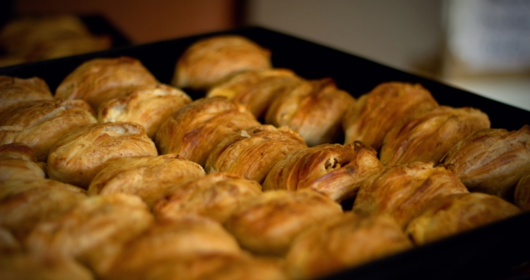
Maltese cuisine is what happens when Sicily, North Africa, and the eastern Mediterranean collide on a tiny limestone island in the middle of the sea. Centuries of occupation by the Phoenicians, Romans, Arabs, Normans, Knights of St. John, French, and British have all left their mark on the kitchen — and the result is a food culture that is genuinely unlike anywhere else.
The dishes are hearty, seasonal, and built around what the island produces: sun-ripened tomatoes, olive oil, capers, rabbit, fresh fish, sheep’s cheese, and the wild fennel that grows across the Maltese countryside. This guide covers the traditional dishes you should not leave Malta without tasting, what they are, what they taste like, and where to find them.
Street Food & Snacks
1. Pastizzi
The undisputed king of Maltese street food. Pastizzi are small, diamond-shaped pastries made from layers of flaky, buttery phyllo-style dough, filled with either ricotta cheese (pastizzi tal-irkotta) or curried mushy peas (pastizzi tal-pizelli). They cost under a euro, they are available from bakeries and kiosks everywhere on the island, and they are best eaten fresh and warm.
The Maltese expression “jinbieghu bhal-pastizzi” (selling like pastizzi) is the local equivalent of “selling like hot cakes” — that is how embedded this snack is in the culture. Eat them for breakfast, as a mid-morning snack, or at any hour of the day. Every local has their favourite pastizzeria, and they will defend it passionately.
- Where to try: Crystal Palace in Rabat is widely considered the best on the island.
2. Ftira
Ftira is a traditional Maltese sourdough bread — ring-shaped, with a thick crust and an airy interior full of irregular holes. It is so culturally important that it was added to UNESCO’s Intangible Cultural Heritage List in 2020. The most common way to eat it is as hobz biz-zejt: the bread is sliced, rubbed with ripe tomato, drizzled with olive oil, and filled with tuna, capers, olives, onions, and sometimes sundried tomatoes or anchovies.
On Gozo, ftira takes a different form — flattened and baked with toppings like a pizza. Both versions are delicious, and trying the difference between Maltese and Gozitan ftira is one of the small pleasures of a trip to the islands.
- Where to try: Merkanti Maltese Street Food at Is-Suq Tal-Belt in Valletta, or The Submarine on Merchants Street. For the Gozitan version, Maxokk Bakery in Nadur.
3. Qassatat
Think of qassatat as pastizzi’s heartier cousin. These round pastries use shortcrust rather than phyllo dough and are typically filled with ricotta, spinach, or mushy peas. They are slightly bigger and more filling than pastizzi, making them a solid option for a quick, cheap lunch on the go.
Main Courses
4. Stuffat tal-Fenek (Rabbit Stew)
Malta’s national dish. Rabbit is slow-cooked in a rich sauce of red wine, garlic, onions, tomatoes, bay leaves, and Mediterranean herbs until the meat falls off the bone. It is traditionally a Sunday family meal (fenkata), and you will find it on the menu at every traditional Maltese restaurant on the island.
The depth of flavour in a well-made rabbit stew is remarkable — earthy, rich, slightly gamy, with the wine and herbs cutting through the richness. It is usually served with spaghetti in the cooking sauce, roasted potatoes, or both.
- Where to try: Legligin or Rubino in Valletta. La Pira Maltese Kitchen for a more casual version. Ta’ Kris in Sliema is also well known for rabbit.
5. Bragioli (Beef Olives)
Thin slices of beef rolled around a stuffing of breadcrumbs, bacon, garlic, parsley, and sometimes hard-boiled egg, then slow-cooked in a red wine and tomato sauce. Despite the name, there are no olives involved — the name comes from the shape. Bragioli is a labour-of-love dish that you will find at traditional restaurants and in Maltese homes on special occasions.
6. Lampuki Pie (Torta tal-Lampuki)
A seasonal fish pie made with lampuki (dorado or mahi-mahi), which is caught off the Maltese coast in late summer and autumn. The pie combines lampuki with spinach, cauliflower, olives, capers, and tomatoes, all encased in shortcrust pastry. It is only available from roughly September to December when lampuki is in season, so if you are visiting in autumn, do not miss it.
7. Aljotta (Maltese Fish Soup)
A light, garlicky, lemony fish soup made with fresh small fish, tomatoes, rice, and a generous amount of mint. It has its roots in French bouillabaisse but with a distinctly Maltese twist. Aljotta is especially popular during Lent but is served year-round at traditional restaurants. It is lighter and fresher than you might expect from a Mediterranean fish soup.
8. Stuffat tal-Qarnit (Octopus Stew)
Tender octopus slow-cooked in a rich tomato sauce with garlic, onions, and Mediterranean herbs. The octopus becomes melt-in-your-mouth soft after the long cooking process. This is a dish you will find at waterfront restaurants, particularly in the fishing village of Marsaxlokk, where the octopus is often caught the same morning.
Starters & Sides
9. Platt Malti (Maltese Platter)
Malta’s answer to Spanish tapas or Italian antipasto. A Maltese platter typically includes bigilla (a thick dip made from mashed broad beans, garlic, and olive oil), gbejniet (small cheeselets made from sheep’s or goat’s milk — served fresh, dried, or peppered), sun-dried tomatoes, Maltese sausage (zalzett tal-Malti), olives, and galletti crackers, all served with fresh Maltese bread.
This is the single best way to taste a range of Maltese flavours in one sitting. Order it as a starter to share, and you will immediately understand why Maltese food is about simplicity, quality ingredients, and Mediterranean sunshine.
- Where to try: Almost any traditional Maltese restaurant in Valletta will serve a version. Legligin, La Pira, and Rubino all do excellent platters.
10. Kapunata
The Maltese version of Italian caponata or French ratatouille. Aubergine, peppers, tomatoes, onions, and garlic are cooked down into a rich, sweet-and-sour vegetable stew. It is served as a starter, a side dish, or sometimes spread on bread. A simple dish done beautifully when the vegetables are in season.
Desserts & Sweets
11. Imqaret
Deep-fried pastries filled with a spiced date paste, often served with a scoop of vanilla ice cream. You will find them at village festas, street food stalls, and traditional restaurants. They are sweet, sticky, and completely addictive — the kind of dessert that sounds simple but hits differently when eaten warm on a Maltese summer evening.
12. Kannoli
Malta’s version of the Sicilian classic. Crispy fried pastry tubes filled with sweet ricotta cream. The Maltese version tends to be slightly smaller than the Sicilian original and is widely available from bakeries and cafes across the island. Best eaten fresh, when the shell is still crunchy.
Frequently Asked Questions
What is the national dish of Malta?
Stuffat tal-Fenek — rabbit stew slow-cooked in wine, garlic, and herbs. It is traditionally served as a Sunday family meal and is available at every traditional Maltese restaurant.
What are pastizzi?
Flaky diamond-shaped pastries filled with ricotta cheese or mushy peas. They cost under €1, are available everywhere in Malta, and are eaten at any time of day. They are the island’s most iconic street food.
Is Maltese food similar to Italian?
There is a strong Italian (particularly Sicilian) influence, but Maltese cuisine also draws on Arabic, North African, and British traditions. The result is a blend that is uniquely Maltese — dishes like pastizzi, ftira, and fenkata have no direct equivalent elsewhere.
Is Malta good for vegetarians?
Malta’s cuisine is traditionally meat- and fish-heavy, but vegetarians will find plenty to eat. Bigilla, kapunata, gbejniet, and pea-filled pastizzi are all vegetarian. Most restaurants in Valletta now offer vegetarian and vegan options.
Where is the best street food in Valletta?
Is-Suq Tal-Belt (the Valletta Food Market) on Merchants Street has the widest selection. For pastizzi, the stands near the market and around City Gate are your best bet.